
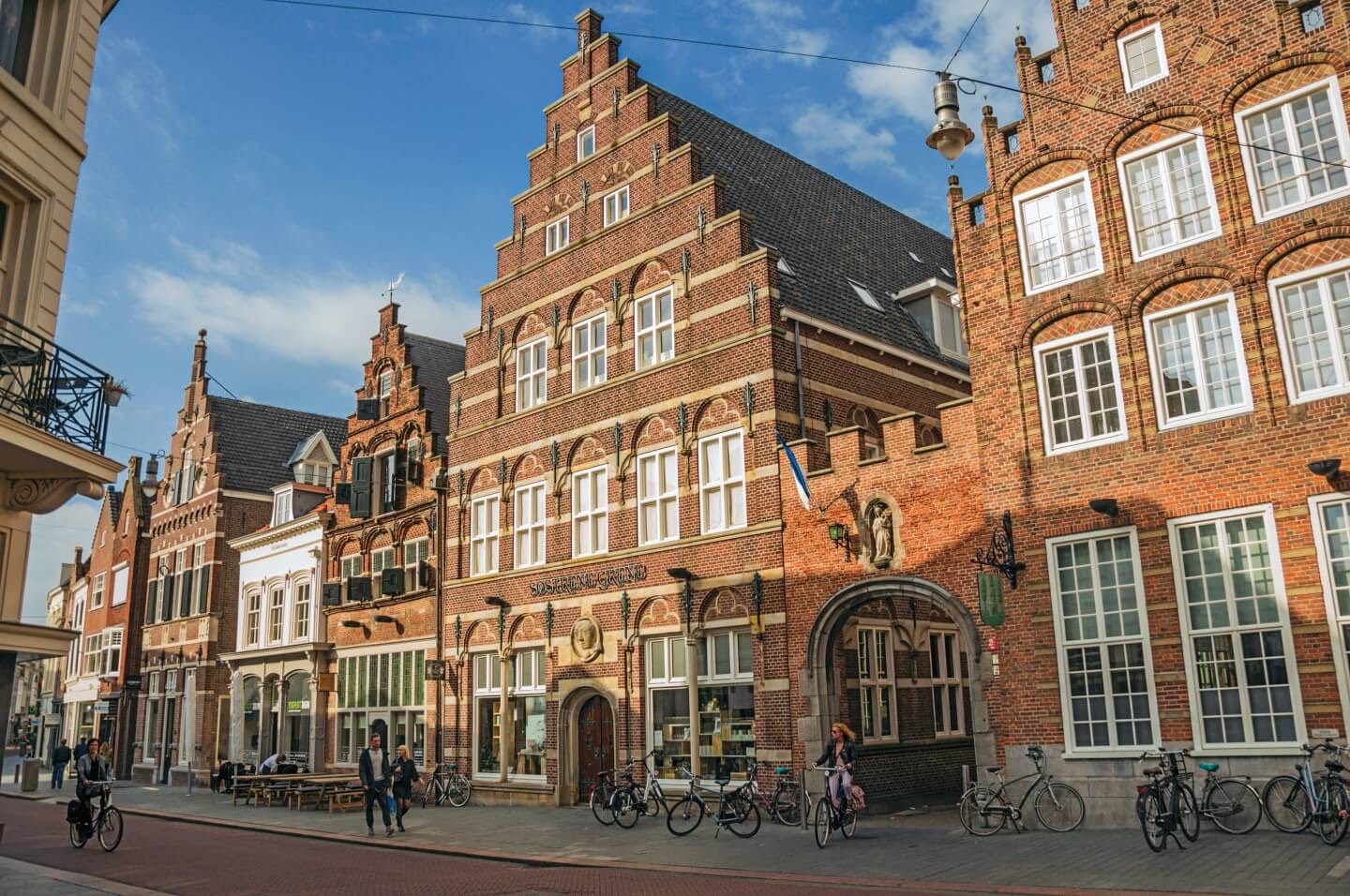
The best time of year for exterior painting in the Netherlands
The best period for exterior painting in the Netherlands runs from roughly April to October, when daytime temperatures are reliably above 10 °C, the timber is dry and the paint has time to cure before evening dew. Late spring and early autumn are often better than high summer, because very hot, direct sun makes paint dry too fast. With modern low-temperature paint systems, careful painters can also work through mild winter spells, which is why waiting lists are shortest between November and February.
Liever Nederlands? Bekijk deze pagina in het Nederlands
Weather, seasons and exterior paint
Why April to October is the classic painting season
Exterior paint needs three things to form a durable film: a dry surface, a temperature above the minimum the manufacturer specifies, and enough time to cure before moisture settles on it. In the Dutch climate those conditions line up most reliably between mid-April and mid-October. Days are long, timber has had a chance to dry out after winter, and average temperatures sit comfortably in the range where alkyd and water-based systems from Sikkens, Sigma and Dulux perform as designed.
Spring has an extra advantage: painting in May or June means the new coating faces its first winter fully cured. Early autumn, September into the first half of October, is usually the most settled weather of the year in Noord-Brabant and is a favourite with professional painters for that reason. Both periods avoid the two enemies of a good finish, which are cold damp and scorching sun.
Because everyone knows this, the season is also when painters are busiest. If you want work done in May, ask for a quote in February or March.
Temperature, humidity and the dew point
Most exterior paints specify a minimum application temperature of around 5 to 10 °C, measured at the surface rather than in the air, and that temperature needs to hold for several hours after application while the film forms. A sunny March afternoon at 12 °C can drop to 2 °C by evening, which is why a professional watches the forecast for the night as well as the day.
Humidity matters as much as temperature. Paint applied when relative humidity is above roughly 85 percent dries slowly and may never bond properly. The critical figure is the dew point: when the surface temperature falls to the dew point, moisture condenses on the fresh paint and leaves it dull, streaky or blistered. Painters keep the surface at least a few degrees above the dew point and stop earlier in the afternoon in autumn as evening condensation arrives sooner.
The timber itself must be dry. A moisture meter reading above about 18 percent means the wood is too wet to seal; painting it in traps water and starts the wood rot process. After a wet week, even in July, a day or two of drying may be needed before work can begin.
Summer heat: why the hottest days are not the best
It is tempting to assume a heatwave is perfect painting weather, but surface temperatures on a dark, south-facing frame can exceed 50 °C in July. Paint applied to a surface that hot skins over before it can flow out, leaving brush marks, poor adhesion and a film that has not bonded to the primer. Water-based products are especially sensitive.
Professionals manage this by following the shade around the house: painting east elevations in the afternoon, west elevations in the morning and leaving the south side for cloudy days or early starts. On the very hottest days, work is often simply stopped between noon and late afternoon. The result is a better finish, not a slower job.
If your house has dark frames or a lot of south-facing joinery, late spring and September are better months than July and August.
Painting outdoors in winter: possible, with care
Modern paint chemistry has changed the old rule that nothing happens outside between November and March. Several manufacturers now produce exterior coatings that cure at temperatures down to around 5 °C and tolerate higher humidity, and a mild, dry spell in December or February is perfectly usable. Kivits paints through the winter on suitable days, using these systems, and it is often the quickest route to getting an urgent wood rot repair sealed before the wettest months do further damage.
Winter work needs more judgement, not less. The painter monitors surface temperature and dew point throughout the day, works shorter hours, and prioritises repairs and priming over final top coats, which may be scheduled for spring. Sheltered elevations and covered areas such as porches and dormers can be done almost year-round. Fully exposed south-west facades are best left until conditions improve.
For homeowners, winter painting has a practical benefit: availability. Waiting times are short, and starting the preparation and repair phase in winter means the house is ready for its top coats early in the season.
Planning around Dutch weather
A realistic exterior painting schedule builds in weather days. A job quoted at five working days may take seven or eight elapsed days in a changeable Dutch spring, and a good painter will say so in the quote rather than promise a fixed finish date. Scaffolding or a platform, if needed, is booked with a little slack for the same reason.
If the coating is failing now, do not wait for perfect weather. Repairs, epoxy wood rot treatment and priming can be done in most conditions, and a primed frame is protected even before the top coats go on. Our guide on how often to paint window frames helps you judge whether the job is urgent, and our wood rot guide shows what to look for.
Kivits Vastgoedonderhoud provides a free inspection and a written quote within 48 hours for homes across Noord-Brabant, including 's-Hertogenbosch, Eindhoven, Tilburg and Breda. All exterior painting comes with a 5-year warranty, and we are happy to plan the work in English. Get in touch to reserve a slot in the season that suits you.
Our services
Exterior painting
Window frames, doors, fascias and facades.
Wood rot repair
Epoxy repair instead of replacement.
Interior painting
Walls, ceilings and woodwork, dust-free.
Airless spray painting
Seamless walls and ceilings.
Wallpapering
Glass-fibre, renovation fleece and patterns.
HR++ window glazing
Insulating glass installation.
Frequently asked questions
Can you paint the outside of a house in the rain?
No. Surfaces must be dry, and a shower on fresh paint will spoil the finish. Painters work between showers on days with a dry forecast and stop well before rain arrives. Light rain the previous day usually means a morning of drying before work can resume.
What is the minimum temperature for exterior painting?
Most standard products specify 10 °C at the surface; some modern systems go down to around 5 °C. The temperature must hold for several hours after application, so the overnight forecast matters as much as the daytime figure.
Is autumn a good time for exterior painting?
September and early October are often the best weeks of the year: settled weather, moderate temperatures and less intense sun. Later in October evenings get damp early, so painting hours shorten and the schedule needs more flexibility.
How far in advance should I book an exterior painter?
For spring or summer work, two to three months ahead is sensible in Noord-Brabant. For winter or early spring, a few weeks is usually enough. Kivits sends written quotes within 48 hours of a free inspection so you can plan early.
Will a job be delayed by bad weather?
Sometimes, yes. A quote should allow for weather days rather than promise a fixed end date. We keep clients informed day by day and prioritise protective stages, such as repairs and priming, so the house is never left exposed between visits.
Need a painter? We speak English.
Free on-site inspection. Written quote within 48 hours. 5-year warranty.
Call +31 6 36402640Or email usServices
- → Wood rot repair in Den Bosch & Noord-Brabant
- → Exterior house painting in Den Bosch & Noord-Brabant
- → Interior painting in Den Bosch & Noord-Brabant
- → Airless spray painting in Den Bosch & Noord-Brabant
- → Professional wallpapering in Den Bosch & Noord-Brabant
- → HR++ insulating glass installation in Den Bosch & Noord-Brabant
Areas
Guides for expats
- → Who pays for exterior painting in the Netherlands: tenant or landlord?
- → How often should you paint window frames in the Netherlands?
- → Wood rot in Dutch houses: why it happens and how to fix it
- → Painting a monument house in the Netherlands
- → VvE painting explained: how Dutch owners associations handle exterior work
- → Nederlandse versie
Ready for a painter who speaks your language?
Free inspection, clear written quote and a 5-year warranty. Serving all of Noord-Brabant.