
How often should you paint window frames in the Netherlands?
Exterior timber window frames in the Netherlands typically need a full repaint every 5 to 7 years, with a light maintenance coat around the halfway point. South- and west-facing elevations take the most sun and driving rain and often need attention after 4 to 5 years, while sheltered north sides can last 8 or more. The Dutch combination of damp winters, UV-heavy summers and older softwood frames makes regular painting the cheapest way to prevent wood rot.
Liever Nederlands? Bekijk deze pagina in het Nederlands
Repainting intervals for the Dutch climate
Why 5 to 7 years is the standard interval
Paint manufacturers such as Sikkens, Sigma and Dulux design their exterior systems to protect timber for a set number of years under normal exposure. In the Netherlands that works out at roughly five to seven years for an opaque (dekkend) finish and somewhat less for translucent stains, which contain fewer UV-blocking pigments. After that period the binder in the paint has been broken down by sunlight and moisture, and it stops sealing the wood even if it still looks reasonable from the pavement.
The interval is not arbitrary. Once the coating becomes porous, rain enters the timber through joints and end grain, dries out slowly in the Dutch climate, and creates exactly the conditions wood-rot fungi need. Repainting at year six costs a fraction of replacing a rotten frame at year twelve. Many Dutch homeowners follow a rhythm of a full repaint every six years with a quick clean and single maintenance coat in between.
Frames that were prepared well last longer. A frame that was sanded back, primed and given two top coats will comfortably reach seven years; one that received a quick overcoat on top of failing paint may show problems within two.
Sun, rain and orientation: why one side of the house fails first
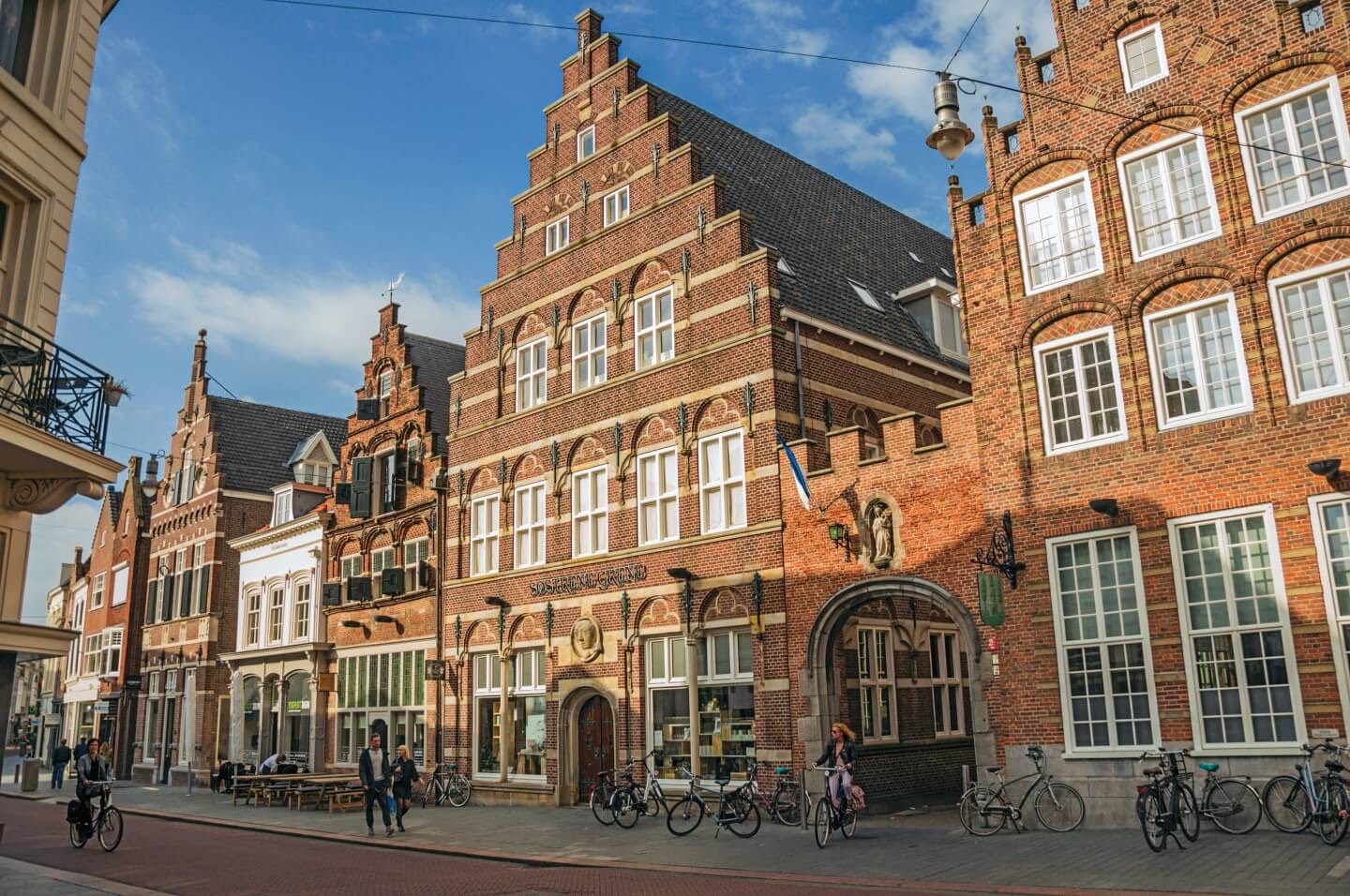
Walk around any older house in Den Bosch or Tilburg and you will notice the paint on the south and west sides is chalkier and more cracked than on the north. Those elevations receive the most UV and the prevailing south-westerly rain, so the coating there ages fastest. It is completely normal to repaint the sun-facing side a year or two before the rest, and a good painter will suggest exactly that rather than treating the whole house as one job.
Dark colours accelerate the process. A deep green or black frame in full sun can reach surface temperatures well above the air temperature, which makes the timber expand and contract more and puts stress on the paint film. If you love dark frames, plan on the shorter end of the interval, or ask about heat-reflective pigments that several manufacturers now offer.
Horizontal surfaces such as sills, the bottom rails of sash windows and the tops of doors hold standing water and wear out first. Check these areas each spring; they are the early warning system for the whole frame.
Signs your frames are due for painting
You do not need to count years if you know what to look for. Chalking, where a white powder comes off on your finger, means the top layer has weathered away. Hairline cracks and crazing show the film has become brittle. Flaking or blistering means moisture is already behind the paint. Open joints at the corners of the frame, and cracked or shrunken sealant around the glass, are the routes rain uses to get inside.
Press a fingernail or a small screwdriver gently into the bottom corners of the frame and the sill. If the wood is firm, the coating has done its job and a repaint is preventive. If it feels soft or spongy, or the tool sinks in, wood rot has started and the job becomes a repair before a repaint. Our guide to wood rot in Dutch houses covers the test in detail.
Discolouration under a translucent stain, greying of bare wood and green algae on north-facing timber are further signs that the coating is no longer sealing the surface.
Timber versus uPVC and aluminium
Many Dutch homes built after the 1990s, and many replacement windows in older houses, use uPVC (kunststof) or aluminium frames. These do not need painting in the traditional sense, although they benefit from an annual wash and, after fifteen or twenty years, uPVC can yellow or chalk and be refreshed with a specialist coating. If your home has a mix, which is common in renovated 1930s and 1960s properties, only the timber elements need the five-to-seven-year cycle.
Timber is still the norm in older housing stock and in the protected historic centres of Den Bosch and Breda, where uPVC is often not permitted on visible elevations. Well-maintained timber frames last for a century or more; the maintenance schedule is the price of that longevity.
If you are an expat buying an older house, ask the seller or your surveyor when the exterior was last painted. A property that has not been painted for ten years is not a reason to walk away, but it is a reason to budget for a proper exterior programme in the first year, and to have a painter check for rot before you complete.
Planning a maintenance schedule
The simplest approach is a written maintenance plan for the outside of the house: which elevations were painted when, with what system, and when they are next due. Kivits Vastgoedonderhoud provides this as standard after every exterior job, so you or a future owner know exactly where things stand. It also helps you time the work for the right season; see our guide on the best time of year for exterior painting.
A typical plan for a detached or semi-detached house in Noord-Brabant looks like this: full exterior repaint in year zero, a wash and inspection every spring, a single maintenance coat on the south and west sides in year three or four, and a full repaint again around year six or seven. Wood rot found at any inspection is treated with epoxy repair immediately rather than left until the next repaint.
If you would like a free inspection and a written quote within 48 hours, in English or Dutch, get in touch. We serve 's-Hertogenbosch, Eindhoven, Tilburg and Breda, and every exterior job carries a 5-year warranty.
Our services
Exterior painting
Window frames, doors, fascias and facades.
Wood rot repair
Epoxy repair instead of replacement.
Interior painting
Walls, ceilings and woodwork, dust-free.
Airless spray painting
Seamless walls and ceilings.
Wallpapering
Glass-fibre, renovation fleece and patterns.
HR++ window glazing
Insulating glass installation.
Frequently asked questions
Can I wait ten years between exterior repaints?
On a sheltered north elevation, possibly. On sun- and rain-facing sides, ten years almost always means the coating has failed and moisture has entered the timber. The cost of repairing rot far exceeds the cost of the repaint you skipped, so five to seven years is the safer interval.
Does a maintenance coat count as a repaint?
No. A maintenance coat is a single top coat applied to a sound, cleaned surface to extend its life by a few years. A full repaint involves sanding, repairing, priming and two top coats and resets the clock to a new five-to-seven-year cycle.
Do translucent wood stains need repainting more often?
Yes. Translucent stains (transparante beits) contain fewer pigments and give less UV protection, so they generally need renewing every three to five years. Opaque paint lasts longer, which is one reason most Dutch exterior joinery is painted in solid colours.
How can I tell when my house was last painted?
Check the sales documentation or ask the previous owner. Failing that, a painter can estimate from the condition of the coating and the number of paint layers visible at a chipped edge. A free inspection from Kivits includes this assessment.
How much does exterior repainting cost?
It depends on the number and size of frames, the condition of the existing paint and whether any wood rot needs repair, so a general figure would be misleading. We inspect free of charge and send a written, itemised quote within 48 hours.
Need a painter? We speak English.
Free on-site inspection. Written quote within 48 hours. 5-year warranty.
Call +31 6 36402640Or email usServices
- → Wood rot repair in Den Bosch & Noord-Brabant
- → Exterior house painting in Den Bosch & Noord-Brabant
- → Interior painting in Den Bosch & Noord-Brabant
- → Airless spray painting in Den Bosch & Noord-Brabant
- → Professional wallpapering in Den Bosch & Noord-Brabant
- → HR++ insulating glass installation in Den Bosch & Noord-Brabant
Areas
Guides for expats
- → Who pays for exterior painting in the Netherlands: tenant or landlord?
- → Wood rot in Dutch houses: why it happens and how to fix it
- → Painting a monument house in the Netherlands
- → The best time of year for exterior painting in the Netherlands
- → VvE painting explained: how Dutch owners associations handle exterior work
- → Nederlandse versie
Ready for a painter who speaks your language?
Free inspection, clear written quote and a 5-year warranty. Serving all of Noord-Brabant.